Showing posts with label Journal. Show all posts

Wednesday, March 2, 2011

Entry #2: Richard Avedon

Richard Avedon was an American photographer who became renowned for his sense of style and beauty that was conveyed through his artwork. His photographs showed his subjects displaying a great deal of emotion, breaking the standard technique of fashion photography that had subjects stand in almost emotionless poses. His work was used for various fashion magazines, including Vogue, Harper's Bazaar, and Life.
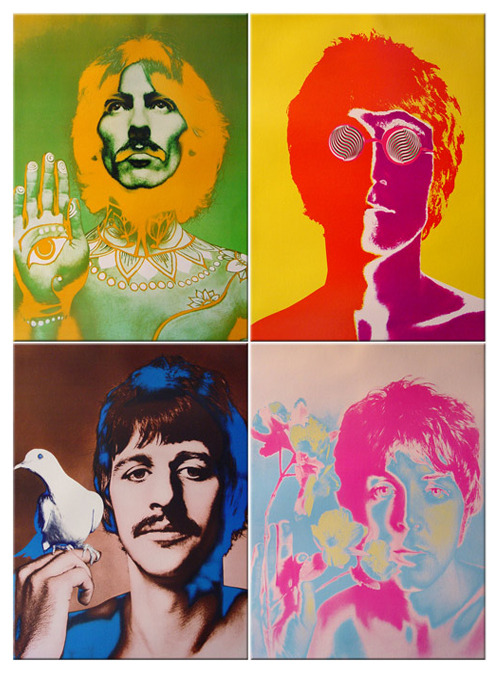
In addition to fashion photography, Avedon began to branch out during the 1960's to document issues such as the Berlin Wall, Vietnam War protestors, mental hospital patients and Civil Rights activists. He also created two famous portraits of The Beatles that featured heavy solarization.

Avedon's style of photography became well-known for its minimalist aspects and attempt to capture the "personality and soul of the subject". His photographs typically show the subject looking directly into the camera against a plain white background. He would often use uncomfortable questions to lead his subjects toward a particular emotional reaction. This allowed him to capture aspects of his subjects' personality and emotions that many other photographers could not.

This photograph impressed me because it does exactly what Avedon attempted in all his photographs: it captures the emotions of the subjects in great detail while still being an aesthetically pleasing photograph. This photograph shows a great deal of action. The two women appear to be in the middle of some action that is captured in this picture. The frozen action conveys a strong sense of movement which is what makes this photograph so interesting. The subjects look very alive, rather than passive. The symmetry between the two of them is interesting and makes this picture look more dramatic.


Monday, February 7, 2011

Entry #1: Silhouettes

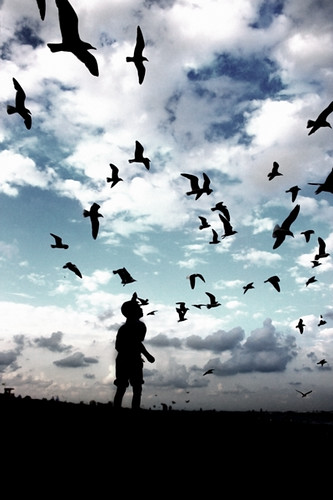
Taking a successful backlit photograph requires going against some basic rules that are normally used to take well-lit pictures. First, it is important that the subject has a well-defined shape that will be easily recognizable against a bright background. An ideal background would be something like a sunset or floodlight. This lights the back of the subject while leaving the front darkened. Use the light meter on the background and adjust the shutter speed and aperture accordingly. This will make the background bright and well-exposed while the subject is dark. Finally, make sure that the subject is in focus. The clear, well-defined shape of the subject adds to the intensity of silhouette photographs. Here are some examples of silhouette photography.